


Everything that is not regarding Burrito.ai specifically. Your playground to discuss what's on your mind.
Recently active
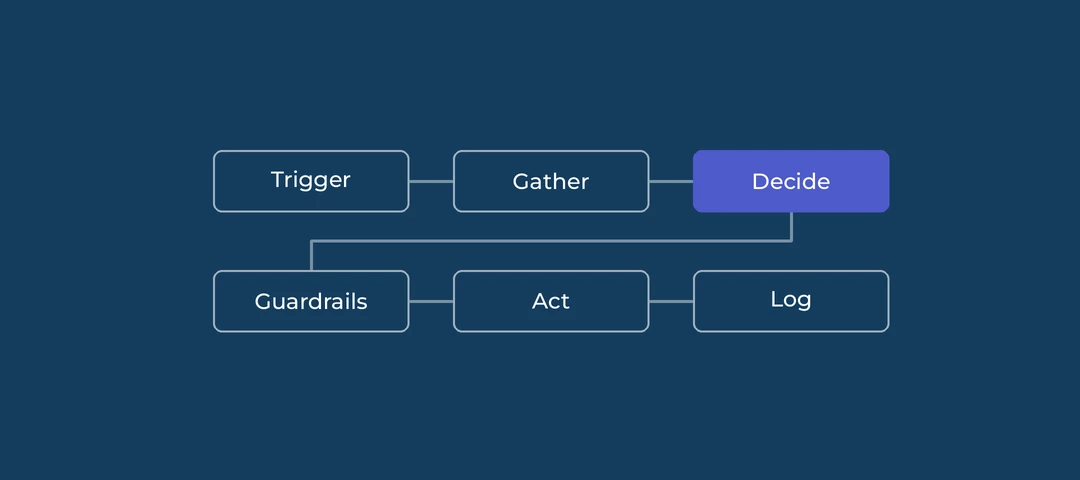
This is the prompt we use in our answer detection example. The agent looks at open questions in your community and decides what to do with each one: mark a reply as the answer, nudge the asker to confirm, or just log it and leave the thread alone.The model only recommends. Your script checks its output and decides whether to act. If you haven’t read it yet, start with Before you automate: what we’ve learned building AI agents for communities. It explains why the agent is built this way.How to use itReplace everything in [brackets] with details from your own community. Keep the output format exactly as it is. Your script depends on it. Test it in Claude first. Paste the prompt, then paste one thread at a time as JSON, and compare the result with what you would have decided. Run it in dry-run mode on 30 to 50 real threads before you let it write anything.The promptYou review open questions in the [COMMUNITY NAME] community and decide whether one of the replies already answers the questio
AI can take a lot of repetitive work off a community team. It can also post the wrong thing in public, under your name, at scale. Most of what follows is about getting the first without the second. 1. Pick the right first taskYour first automation should be boring. Look for a task that's narrow, repetitive, happens often, and is cheap to get wrong.Answer detection is a good example. The agent checks open questions, and if a reply already solves the problem, it marks the answer or asks the member to confirm. If it gets one wrong, a moderator can fix it in a few seconds.Bad first tasks are anything involving billing, security, account data or member complaints. Save those for later, or keep a person in the loop permanently. 2. The model recommends, code decidesThis is the most useful rule we have. The AI model never touches your community directly. It reads a thread, returns a recommendation in a fixed format, and a script checks that recommendation before anything happens.So rules that
I had a bad tomato summer three years ago. The market tomatoes were pale and tasteless by mid-August and every salsa I made that season was flat in a way I could not fix with technique. Out of frustration I put six roma tomato plants in containers on a south-facing balcony the following spring. By July I had more tomatoes than I needed and every single one tasted more of tomato than anything I had bought in years. Now: twelve plants, a tomatillo section, two types of chile, and a growing conflict with my balcony space. The salsas I make in season are the reason I keep the garden. The rest of the year I use good canned tomatoes and remember what is possible.
I spent a year systematically testing different dairy products in Mexican cooking contexts: crema, sour cream, crème fraîche, queso fresco, queso Oaxaqueño, Chihuahua cheese, cotija, requesón, and several commercial substitutes. Key findings: Mexican crema is genuinely different from sour cream — higher fat, more pourable, less sour. Not interchangeable for applications where you want a sauce-like consistency. Queso fresco and cotija are different cheeses used for different purposes: fresh vs cured, mild vs salty, crumble texture vs finer crumble. Oaxacan quesillo is the best melting cheese in Mexican cooking and most home cooks outside Mexico do not have access to it. Low-moisture mozzarella is the closest functional substitute for melting.
I am in the UK and the masa harina I can find locally is limited to one or two brands, neither of which I am confident about in terms of quality or whether they are suitable for both tortillas and tamales. What do people in the UK or Europe use and where do they source it?
After cooking indoors exclusively for years, I built an outdoor station this summer and the change to my cooking is significant. Outdoor photo documentation. Setup: a large commercial propane burner on a steel-frame table, a cast iron comal mounted on the second ring, a charcoal chimney for direct flame work, and a stainless prep table alongside. What changed: I can cook at higher heat than any indoor setup because ventilation is unlimited. The comal temperature I can reach outdoors is genuinely different from indoors — hotter and more even. Charring tomatillos, chiles, and corn directly over flame without setting off the smoke alarm. For anyone who has outdoor space: even a single outdoor burner on a table changes what is possible.
I listen to podcasts while I cook and have run through most of the general food podcasts. Looking for recommendations from people who cook the way we cook here — technique-focused, interested in the history and science of food, specifically interested in Mexican and Latin food. Anything in Spanish also welcome.
I have cilantro aversion (it tastes strongly of soap to me — genetic, nothing to be done). I spent a year systematically testing substitutions in dishes that typically use cilantro and want to share the results. For tacos and burritos: flat-leaf parsley plus extra lime works best. The parsley provides green herbal freshness; the lime provides the bright finish note. Not identical but the closest functional result. For salsa verde: epazote (where available) or Mexican oregano. Both read as 'Mexican herb' without cilantro's specific soapy quality. For guacamole: just skip it entirely. Cilantro-free guacamole with good lime, salt, and fresh onion is excellent on its own terms. For pico de gallo: flat-leaf parsley is the substitute. Add it at the last second — it wilts faster than cilantro.
I have been using a cast iron comal but it is very heavy and takes a long time to heat up. I want to try carbon steel which I understand heats faster and is lighter. What brands or specifications should I look for? Any brands to avoid? And is there a meaningful difference between a comal and a carbon steel flat pan for this purpose?
I see this come up and I want to put down my own position clearly. The burrito in its current most common form — large flour tortilla, rice, beans, protein, multiple toppings — is a border and northern Mexican food that evolved through the 20th century in Sonora and Chihuahua and in the US border states. It is not ancient, it is not pan-Mexican, and it is not identical to what you find in most parts of Mexico. But 'not ancient' and 'not pan-Mexican' do not mean 'not Mexican.' Food evolves. The burrito has Mexican DNA — the tortilla, the beans, the chile-based proteins — and developed in places where Mexican food culture was central. Arguing about authenticity in food is usually less interesting than understanding the history. The burrito's history is specific and interesting. The authenticity debate is not.
I am in Germany and the dried chiles I find locally are unlabelled, inconsistent in quality, and not the specific varieties I need for the recipes I am working from. I need reliable sources for ancho, guajillo, arbol, pasilla, and mulato. Anyone sourcing from a European supplier who can speak to quality and reliability?
Not all cookbooks are technique books. Here are three that changed how I think rather than just what I cook. Diana Kennedy's The Art of Mexican Cooking: the most rigorous documentation of regional Mexican food in English. Not prescriptive — investigative. Reading it changed my understanding of what regional means. Nuevolution by Enrique Olvera: a chef's cookbook that is also a philosophy of Mexican food. The mole pages changed how I approach complexity. Salt, Fat, Acid, Heat (Samin Nosrat): not Mexican but the fat and acid chapters rewired how I think about every dish, including Mexican food. The acid chapter is the most useful 30 pages I have read about cooking. Books that teach you to think are worth more than books that teach you to follow.
I have been pairing mezcal with home-cooked Mexican food for a year and want to share what I have found works. Carnitas: a smoky mezcal is the obvious choice but I prefer a joven mezcal with light smoke — the fat in the carnitas provides enough depth that the mezcal does not need to add more. A heavily smoked mezcal competes. Chile verde: anything citrus-forward. The green chile and tomatillo base is already complex and acidic; a bright mezcal echoes rather than fights it. Mole negro: the most complex food in this category and probably the one place I reach for an añejo. The aged spirit can stand up to the depth of a proper mole negro without being lost in it.
Started a mole negro three weeks ago because I had a free Saturday. Twenty six ingredients, six hours, and a result I would describe as fine. The thing that got me is that every source disagrees about the order. Some toast the chiles first and fry after, some the reverse, one insisted on doing both in the same pan without cleaning it, which I now suspect was the actual point. So. Who here has gone properly deep on this, and did you land anywhere you would defend?
Serious question. I have a week off in November and no plan. I am willing to build the whole trip around one place if that place is actually worth it. Not looking for the famous ones that turn up in every list. Looking for the one you would personally get on a plane for.
Went out Tuesday morning and the bottom third of the bed had gone. Brown lesions on the stems, leaves curling, the whole thing. Pulled eight plants and burned them. This is year three and it is the first time it has happened, which somehow makes it worse. I had started to think I was good at this. I grow in raised beds, drip irrigation, decent spacing. Wet July is the only thing I can point at.
Standing weekend thread. Not necessarily burritos, not necessarily Mexican, just what is happening in your kitchen. I have a bar shift Friday and Saturday so Sunday is the only day I cook properly. Doing carnitas, mostly because it needs four hours of nothing and I need four hours of nothing.
Test post for punctuation validation. Ignore this.
We expected the top answer to be portion size, or maybe protein quality. Instead, the single most common thing people brought up, unprompted, was the ratio between filling and tortilla. Almost a third of the fifty people we talked to said a burrito that's mostly rice with a thin tortilla wrapper feels like a letdown, even if the ingredients themselves are good.Second most common answer: temperature consistency. People notice when the outside of a burrito is hot but the center is lukewarm, which usually means it sat too long between assembly and being handed over.A smaller but vocal group brought up something we hadn't expected at all: the fold holding up for the entire meal, not just the first bite. Several people specifically mentioned burritos that were perfect for the first two bites and then fell apart completely by the middle, which they described as more disappointing than a burrito that was mediocre throughout.Only four people out of fifty mentioned size as their top priority. T
None of these are the obvious pick in their neighborhood, which is exactly why they're on this list.La Ventanita, in a strip mall next to a laundromat, does a green chile pork burrito that's worth the twenty minute wait on a Saturday. Ask for it mojado and don't plan on driving anywhere for the next hour.Tres Hermanas doesn't have a sign out front, just a hand painted board that says Burritos and an arrow. Cash only, and the woman working the register has strong, correct opinions about how much hot sauce you actually need.El Rincón's breakfast burrito is only served until 11am and somehow still surprises the regulars who've been ordering it every Tuesday for years. The potatoes are the reason.Burritos Jalisco, twenty minutes outside downtown, is where three separate people told me to go before I'd even asked. That kind of unprompted recommendation from strangers means something.And Casa Elena, run out of what used to be someone's actual garage, only opens Thursday through Saturday. If
Every training video shows the same fold: tuck the sides, roll away from you, done. What they skip is the compression step, and it's the reason so many burritos fall apart by the second bite.Before you fold anything, you need to press the filling down into a tight, even log with the back of your hand or a spatula. Not flatten it, just settle it so there's no air pocket running down the middle. Air pockets are what make a burrito collapse the moment someone picks it up.Then, when you tuck the near side over the filling, pull it back toward yourself slightly before you roll forward. That backward pull is what tightens the whole thing like a drawstring. Skip it and you get a loose roll that looks fine on the line and falls apart in someone's car five minutes later.I've trained maybe thirty people over the years and the ones who struggle almost always skip the compression step because it feels like it's slowing them down. It adds maybe two seconds. Two seconds now saves you a complaint abo
When I opened three years ago I did what everyone told me to do. Flyers in the neighborhood, a radio spot on the local station, a banner outside. I spent close to four thousand dollars in the first six months and couldn't tell you which part of it brought anyone in the door.So last year I tried something more deliberate. Every new customer got asked one question at checkout: how'd you hear about us. Nothing fancy, just a tally on a clipboard by the register. After four months the answer was overwhelming: a local food account on Instagram that posts short videos of the fold and the first bite, and word of mouth from people who'd seen those videos.I moved my whole marketing budget behind that one channel. Paid the account owner a flat fee to feature us twice a month, and I started filming my own thirty second clips on a five year old phone. Foot traffic from new customers is up almost forty percent since March, and I'm spending less than half of what I used to.The lesson wasn't that soci
For three years we were open seven days a week, 11 to 9. My staff was burning out, and so was I. Turnover was brutal, almost one cook a month walking out the door.Last January I closed Sundays after 2pm. On paper that's fourteen hours of trading time gone. In practice, weekly revenue barely moved, because Sunday afternoons were already our slowest stretch, mostly people looking for something to do rather than actively craving a burrito.What changed was everything behind the counter. My kitchen manager finally had a real day off to plan the week instead of firefighting. Two of my longest-tenured cooks told me directly it's the reason they stayed instead of taking a job at the new taco spot down the street.A lot of owners treat every open hour as sacred, like closing early is leaving money on the table. Sometimes it's the opposite. Look at your slowest four hours of the week and ask what they're actually costing you in burnout before you assume they're worth keeping.
I used to run a menu with forty things on it. Six proteins, four rice options, three kinds of beans, a salsa bar with eight jars. It looked generous. It also meant every ticket took ninety seconds longer to build, and my new hires spent their first two weeks just memorizing where things went.Last spring I cut it down to twelve items. Three burritos, two bowls, a taco plate, and sides. Revenue didn't drop. It went up eleven percent over the next quarter, mostly because the line moved faster during the noon rush and we stopped running out of stray ingredients nobody ordered anyway.The instinct to add more feels like generosity. Customers usually read it as noise. When someone walks in hungry and sees a wall of options, they hesitate, and hesitation slows your whole line down behind them.If you're staring down a bloated menu right now, try this: pull your last three months of sales data and look at what's actually selling. I'd bet twenty percent of your items account for most of your reve
Already have an account? Login
No account yet? Create an account
Enter your E-mail address. We'll send you an e-mail with instructions to reset your password.